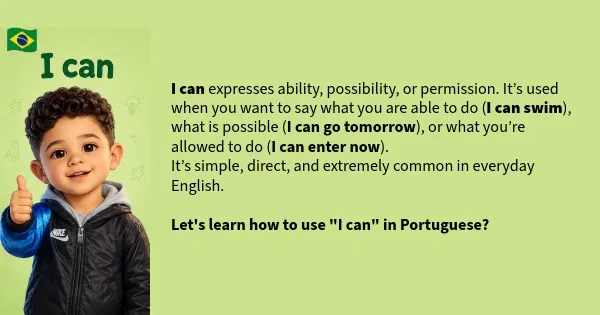
“Can” is a small English word with three different jobs. But in other languages, each job uses a different word. So in this lesson, we don’t teach the word “can” — we teach the meaning behind it.
Kids learn that “can” can mean:
-
Ability — what you are able to do (“I can swim” = I know how to swim)
-
Permission — what you’re allowed to do (“I can go outside” = I have permission)
-
Possibility — what is possible (“I can go tomorrow” = maybe it will happen)
Because other languages use different words for these meanings, we teach each meaning one at a time, with clear examples, gestures, and visuals. This helps American kids understand why the translations change and keeps them from getting confused.
The goal of the lesson is to help kids see that:
-
English uses one word (“can”)
-
Portuguese uses different verbs (sei, posso, consigo)
By learning the meaning first, kids can match the right verb in each language and build strong, accurate language patterns.